


How much time do we actually spend shaving?
For many people, shaving is simply part of their daily routine—sometimes even every single day. Depending on the area of the body, it can easily take between five and fifteen minutes. Over the course of a year, that adds up to many hours spent in the bathroom.
And let’s be honest: how often do we skip shaving because we don’t have enough time in the morning, the kids are waiting, work is calling, or we’d simply rather stay in bed for a few more minutes?
On top of that, many people experience razor burn, small cuts, ingrown hairs, recurring inflammation, or constantly irritated skin.
That is exactly why more and more women and men are choosing permanent laser hair removal. Today, the treatment is about much more than smooth skin. For many people, it primarily means one thing: a better quality of life and more time for the things they truly enjoy.
At my practice in Gütersloh, I support clients who are looking for a long-term reduction in hair growth and who value honest, individualized, and medically based advice.
What happens during laser hair removal?
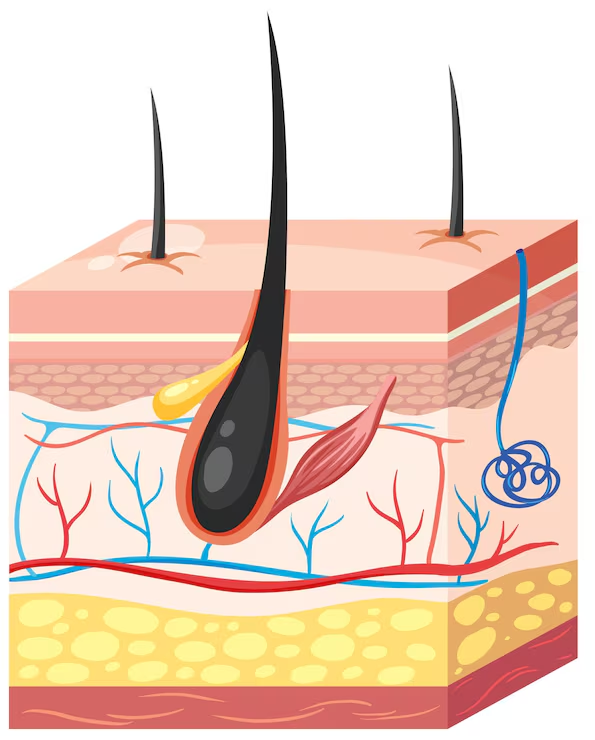
The laser emits concentrated light energy that is absorbed by the dark pigment (melanin) in the hair. This light energy is converted into heat and acts directly in the area of the hair follicle.
The thermal effect damages the structures responsible for hair growth. The goal is to prevent a successfully treated hair follicle from producing new hair in the future.
At the same time, the surrounding skin should be protected as much as possible. This is why a careful assessment of your skin and hair, along with individually adjusted laser settings, is so important.
Why are multiple treatments necessary?
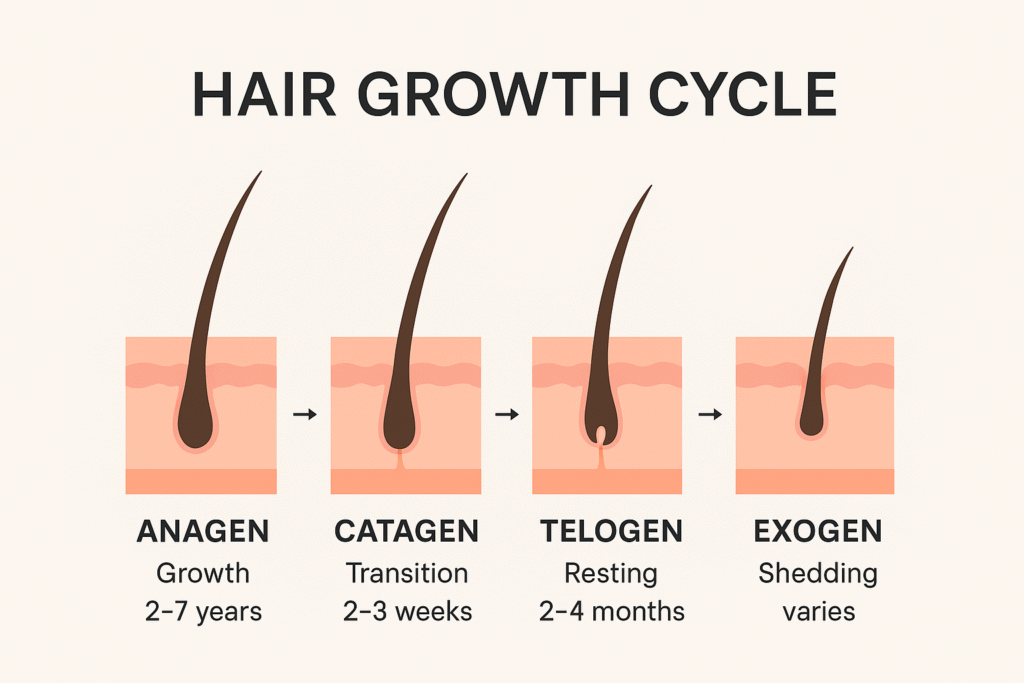
Not all hairs grow at the same time. Every hair is in a different stage of its growth cycle at any given moment.
For laser treatment to be effective, the hair must be in its active growth phase and still connected to the hair follicle. Only then can the laser energy absorbed by the hair reach the area where it is needed most.
Since only a portion of the hairs are in this treatable growth phase during any single appointment, multiple treatment sessions are required. Each session allows additional active hair follicles to be targeted.
During your consultation, I will gladly explain this process using an anatomical model. It is important to me that you not only know what I am doing but also understand why several treatment sessions are necessary.
For me, it’s about more than just smooth skin
Many people initially think of smooth legs, hair-free underarms, or a well-groomed bikini area when they hear about permanent hair removal. However, in my daily work, I find that it is often about much more than appearance.
Many clients come to me because they have struggled for years with ingrown hairs, painful razor bumps, recurring inflammation, or permanently irritated skin. These issues are particularly common in the intimate area, bikini line, underarms, and beard area.
In many cases, years of shaving and repeated inflammation have already caused small scars or dark skin discoloration.
When these problems improve as a result of long-term hair reduction, many clients consider this benefit to be just as valuable as the cosmetic result.
Another major advantage is the freedom it brings to everyday life. Not having to constantly think about the next shave is something many people appreciate during sports, swimming, vacations, or simply in their daily routine.
Why is choosing the right laser so important?

Not every laser device works in the same way. The technology used and the correct settings play a crucial role in ensuring a treatment that is both safe and effective.
I work with a modern 4-wavelength diode laser. By combining different wavelengths, I can tailor the treatment to various skin types, hair characteristics, and different areas of the body.
However, the technology itself is only part of the equation. The experience and qualifications of the practitioner are just as important.
I am a registered nurse with nearly 20 years of medical experience, including 16 years in emergency medicine. This background has given me a trained eye for assessing skin, tissue, and any abnormalities. Careful skin evaluation has been part of my daily professional work for many years.
In addition, I am NiSV-certified in the field of Optical Radiation, which qualifies me to perform professional laser hair removal treatments.
For me, a safe and successful treatment does not begin with switching on the laser—it begins with a careful assessment of your individual needs and suitability.
Who is the treatment suitable for?
Permanent laser hair removal is generally suitable for both women and men who want to achieve a long-term reduction in unwanted hair growth.
The best results are usually achieved with well-pigmented hair, as the laser targets the melanin in the hair. The effectiveness of the treatment also depends on factors such as:
- Hair thickness
- Hair density
- Skin type
- Treatment area
- Possible hormonal influences
Many areas of the face and body can be treated, including:
- Face
- Upper lip
- Chin
- Neck
- Nape
- Underarms
- Arms and hands
- Chest and abdomen
- Back and shoulders
- Bikini line
- Intimate area
- Buttocks
- Legs and feet
- Beard contours
- Cheeks
- Neck area in men
Hair does not respond equally in every area of the body. Hormone-sensitive regions such as the face, chin, and neck may require more patience and additional sessions.
That is why I evaluate every treatment area individually and discuss with you what results can realistically be expected.
What does laser hair removal at my practice involve?
Personal consultation and skin analysis

Every treatment begins with a personal consultation. We discuss your goals, previous experiences, and expectations.
Afterward, I assess your:
- Skin type
- Hair color
- Hair thickness
- Hair density
- Desired treatment area
These factors form the basis for the individual laser settings.
It is important to me that you fully understand how the treatment works and what results are realistically achievable for your personal situation.
Individual laser settings
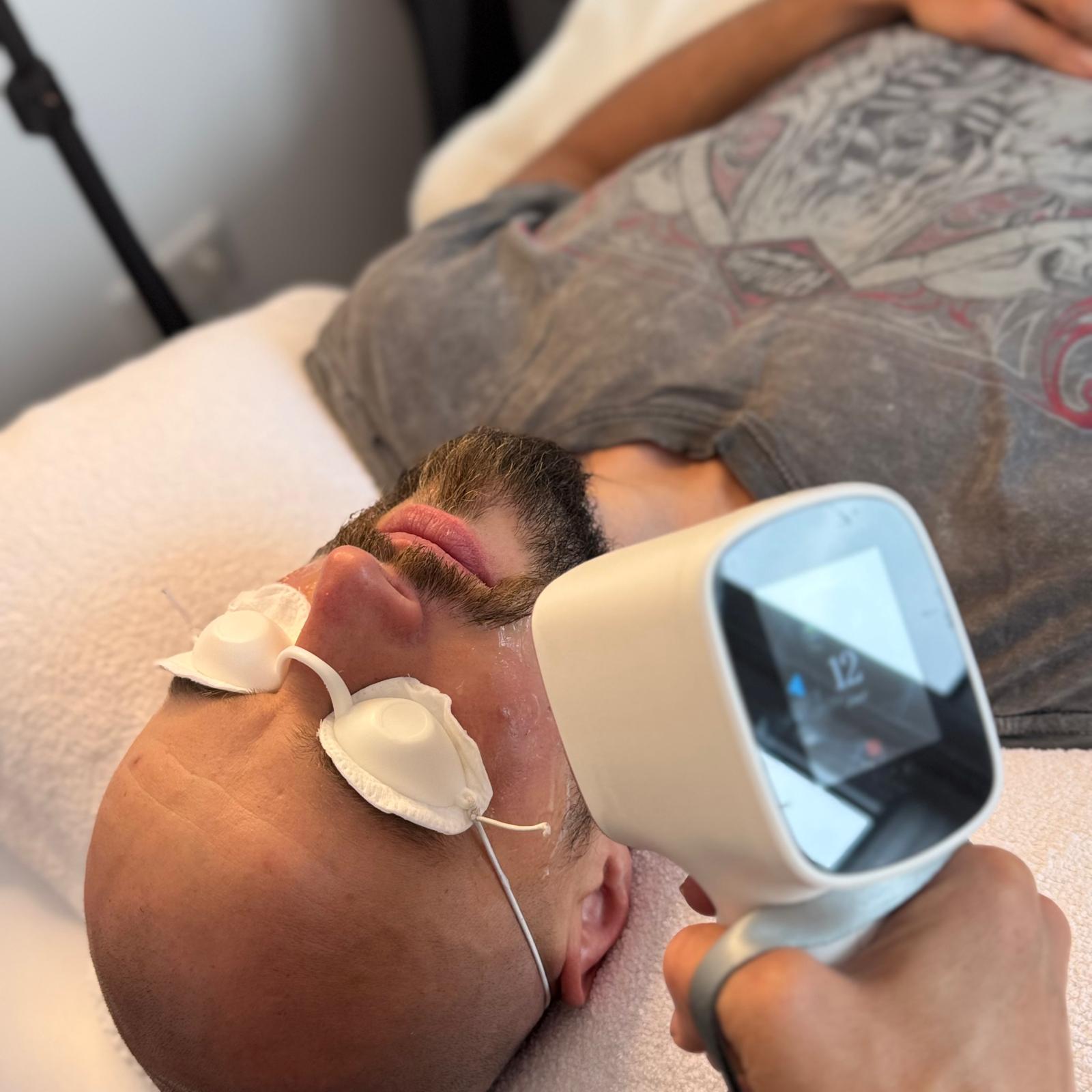
The laser is not used with the same settings for every client.
Every person’s skin reacts differently, and pain sensitivity also varies. Some people feel only a brief sensation of warmth or slight tingling during treatment, while others may find certain body areas more sensitive. In women, sensitivity can also vary depending on the phase of the menstrual cycle.
Throughout the entire treatment, I closely observe both your skin’s reaction and your personal comfort level. These two factors are not always the same and must be considered individually.
The goal is not to use the highest possible energy.
The goal is to use the right amount of energy for your skin and your hair.
I want to achieve the best possible result from every treatment while protecting your skin at the same time.
That is why I do not believe in the principle of “more is better.” Instead, I carefully choose the settings to achieve the most effective results without placing unnecessary stress on your skin.
How to prepare for your laser treatment
Ideally, you should shave or trim the treatment area the day before your appointment.
Throughout the entire treatment period, you should avoid:
- Waxing
- Epilating
- Plucking the hair
These methods remove the hair from the follicle, meaning the laser temporarily loses its target.
Shaving and trimming, however, are completely acceptable and even recommended.
A small amount of stubble may still be visible before your appointment while the hair root remains intact. At the same time, your skin has a chance to recover from shaving, which often makes the laser treatment more comfortable.
What should you keep in mind after laser hair removal?
I closely monitor your skin both during and immediately after the treatment.
The skin reaction I aim for is not severe redness over a large area, but rather a slight, localized swelling around the treated hair follicles.
This reaction, known as the perifollicular reaction, indicates that the laser energy has successfully reached the hair follicles. These small bumps may resemble goosebumps or mosquito bites and usually disappear within a few hours.
Depending on your skin type, hair thickness, and the treated body area, this reaction may vary in intensity. If it is only slightly visible, it does not automatically mean that the treatment was unsuccessful.
What are “Jumping Hairs”?
Sometimes, individual hairs can be seen popping out of the skin immediately after a laser pulse. This phenomenon is commonly known as “Jumping Hairs.”
As the pigmented hair rapidly absorbs the laser energy and heats up, some hair shafts may instantly eject from the hair follicle.
Jumping hairs may occur, but they are not visible during every treatment or on every body area. Their absence does not indicate that the treatment has failed.
Sun, tanning beds, and heat
For the first two to three days after treatment, the treated skin should not be exposed to intense sunlight.
You should also completely avoid tanning beds.
On the day of treatment—and preferably the following day as well—you should avoid:
- Saunas
- Steam baths
- Hot tubs
- Any other sources of intense heat
Strong UV exposure and excessive heat may unnecessarily irritate the freshly treated skin.
Skin care after laser treatment
During the first few days, use only mild, fragrance-free skincare products.
A cooling, fragrance-free Aloe Vera gel can be soothing and help calm the skin.
Avoid exfoliants and highly irritating skincare ingredients until your skin has fully recovered.
What happens to the remaining hairs after treatment?
Most treated hairs do not disappear immediately during the laser session.
Due to the thermal effect, the hairs gradually loosen inside the follicle. Over the following days and weeks, they are naturally pushed out of the skin.
This delayed shedding should not be confused with the Jumping Hair phenomenon, which occurs immediately during the laser pulse.
During this period, you may continue to shave or trim as needed.
Many people notice that after several days, the treated hairs come out very easily while drying off or gently rubbing the skin with a towel.
Ideally, around two to three weeks after treatment, you can enjoy a nearly hair-free period before new hairs from another growth cycle become visible.
How many laser treatments are necessary?
There is no fixed number of sessions that can be promised in advance.
The number of treatments depends on your individual hair and skin characteristics and becomes clearer as the treatment progresses.
An example from my practice
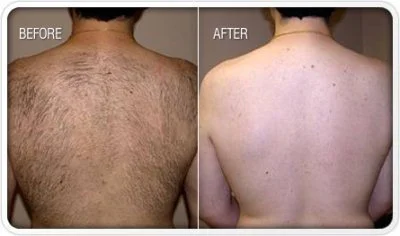
People with very dense, dark, and coarse hair often require more sessions than those with less dense hair growth.
Although thick, pigmented hair usually responds very well to laser treatment, the large number of hairs means that:
- The treatment may feel more intense.
- Many active hair follicles must be treated over multiple growth cycles.
People with less dense hair growth may need fewer sessions.
For very light or minimally pigmented hair, I carefully evaluate whether laser treatment is likely to be successful at all.
If I believe there is no realistic chance of achieving good results, I will honestly advise against the treatment.
Unsure whether the laser will work for your hair?
In such cases, I am happy to offer a small test treatment.
For example, I may treat only one underarm, leaving the other untreated.
This allows both of us to compare the results after a few weeks and determine how well your hair responds to the laser.
Although a follow-up appointment is usually scheduled after about four weeks, I can say with a smile that many of my clients have been so impressed by the visible difference after just two weeks that they didn’t want to wait any longer and asked to have the second underarm treated immediately.
For me, the test treatment is an honest and straightforward way to eliminate uncertainty and allow you to see the difference for yourself.
How often should laser hair removal treatments be scheduled?
The intervals between treatments are not based solely on a fixed schedule. What matters most is how your hair growth develops and whether the timing is right for the next session.
It is not uncommon for clients to contact me before their appointment and say:
“I hardly have any hair left to shave.”
This is often a very positive sign and may indicate that significantly fewer hairs are growing back.
In such cases, I review your progress and decide together with you whether to keep the appointment as planned or postpone it by one or two weeks.
An earlier appointment is not automatically more effective. At the same time, I do not want to delay treatments unnecessarily, so we can continue working within the optimal hair growth cycle.
The intervals between sessions may vary depending on the body area and often become longer over time as less hair grows back.
For me, the most important factor is choosing the right time for your next treatment—not too early and not unnecessarily late.
What results are realistic?
My goal is to permanently and significantly reduce your hair growth.
Successfully treated hair follicles are damaged in such a way that they are no longer able to produce new hair. Any remaining hairs often become finer, softer, and much less noticeable over time.
However, “permanent” does not necessarily mean that not a single hair will ever grow again for the rest of your life.
For this reason, professionals often use the term permanent hair reduction, referring to a long-lasting reduction in hair growth rather than a guarantee of complete and lifelong hairlessness.
Hormonal changes may stimulate new hair growth later in life. In such cases, occasional maintenance treatments may be beneficial.
At every appointment, I carefully assess how your hair growth is developing and how long your hair-free phases are lasting.
Providing an honest assessment is far more important to me than making unrealistic promises that cannot be fulfilled for everyone.
When should laser treatment be postponed?
Not every skin condition is suitable for laser treatment at any given time.
I postpone treatment if you have:
- Acute skin inflammation
- Open wounds
- Skin diseases in the treatment area
- Sunburn
- Heavily tanned skin
Treatment will only be performed once the skin has fully recovered.
Certain medications can also increase your skin’s sensitivity to light.
For this reason, it is important that you inform me about any medications you are currently taking before your treatment. I will then assess whether the procedure can be carried out safely or whether it should be postponed.
Tattooed skin is never treated directly with the laser.
Tattoos, highly pigmented areas, and suspicious skin lesions are carefully avoided. If I notice an unclear skin abnormality, I will recommend that you have it medically evaluated before proceeding with treatment.
Can the laser damage my internal organs?
This is a question I am frequently asked during consultations.
The simple answer is:
No.
When laser hair removal is performed correctly, the laser does not reach or damage your internal organs.
The laser energy is specifically absorbed by the melanin in the hair, converted into heat, and acts only within the area of the hair follicle.
Laser light is not comparable to X-rays or radioactive radiation.
The potential risks of improper laser use mainly concern the treated skin and the eyes.
That is why individualized settings, professional application, and reliable eye protection are essential for every treatment.
My personal conclusion
For me, permanent laser hair removal is about much more than simply achieving smooth skin.
It can give you valuable time back in your daily life, reduce recurring skin irritation, and help you feel more comfortable and confident in your own skin.
A successful laser treatment begins with honest advice and a careful assessment of your skin and hair.
I want you to understand how the treatment works, have realistic expectations, and feel safe and well cared for throughout the entire process.
If I believe that there is no realistic chance of achieving a satisfactory result, I will tell you honestly.
If you would like to find out whether permanent laser hair removal is right for you, I would be happy to welcome you to my practice in Gütersloh, where I can personally assess your skin and hair and answer all of your questions in a relaxed consultation.

Author
Professionally written by Tanja Bromberg
Practicing at Private Practice of Alaa Alshamee & Tanja Bromberg, Gütersloh
Registered Nurse
Nearly 20 years of medical experience
16 years of experience in emergency medicine
NiSV-certified in the specialist module Optical Radiation
Category
Latest From Blog
Permanent Laser Hair Removal in Gütersloh – Say Goodbye to Daily Shaving?
Popular Tag